
 CONFERENCE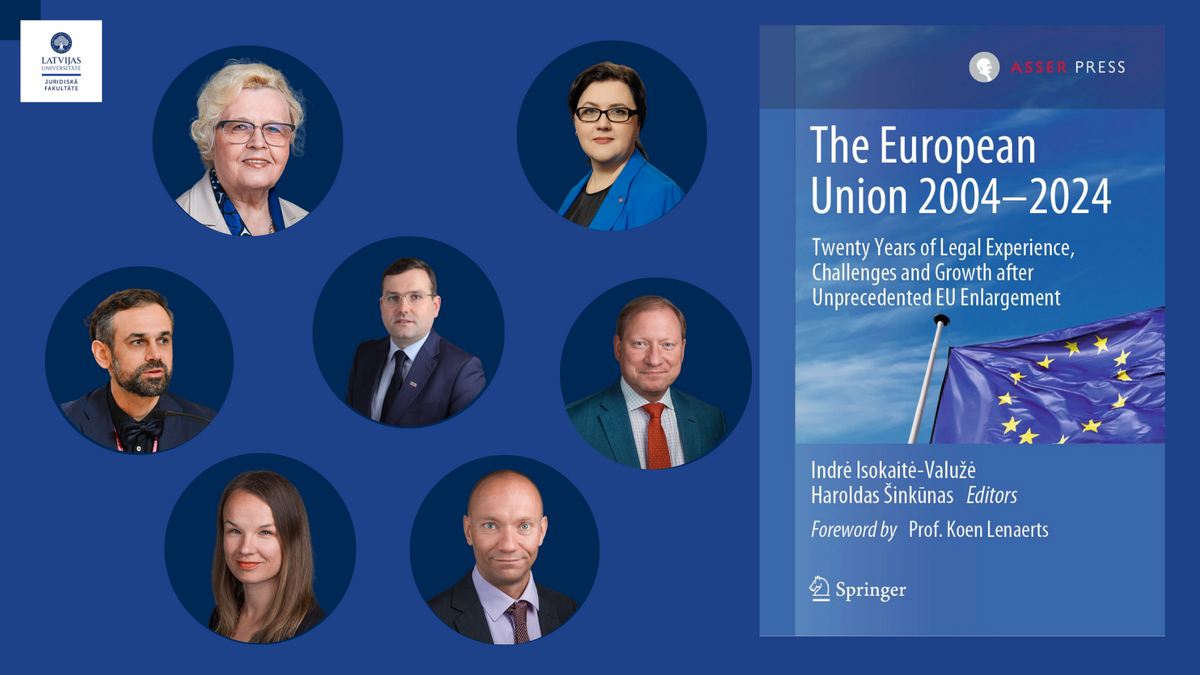
The monograph also includes several scholarly contributions by researchers from the Faculty of Law of the University of Latvia, offering an in-depth analysis of Latvia’s experience in the context of EU membership.
In the chapter “Europeanization of National Constitutional Identity: 20 Years of Latvia in the European Union”, Associate Professor Jānis Pleps, Kalvis Engīzers and Viktorija Soņeca analyse the development of Latvia’s constitutional identity under the influence of European Union law. The authors conclude that EU law has become an integral part of Latvia’s legal system and that membership in the European Union has established itself as one of the fundamental principles of Latvia’s constitutional identity, strengthening democracy, the rule of law and the protection of state independence.
In another chapter, “Development of Criminal Law in Latvia in the Last 20 Years—The Impact and Expression of EU Law”, Professor Kristīne Strada-Rozenberga, Professor Ārija Meikališa and Associate Professor Jānis Rozenbergs evaluate the influence of EU law on the development of Latvian criminal law and criminal procedure over the past twenty years. The study analyses the role of EU requirements in the criminalisation of offences, the regulation of asset confiscation, as well as the impact of EU legal instruments on criminal proceedings, including judicial cooperation and the functioning of the European Public Prosecutor’s Office.
The concluding part of the book includes the study “20 Years Later: Lessons from Latvia’s Accession to the European Union and Their Implications for Ukraine’s European Union Membership” by Assistant Professor Edmunds Broks, Christoph Schewe, Assistant Professor Arnis Buka and Lecturer Lolita Buka. The article compares the experiences of Latvia and Ukraine on their path towards EU membership, emphasising that Ukraine’s integration process takes place under significantly different geopolitical circumstances and may require a more flexible and politically adaptable model of EU enlargement.
The publication “The European Union 2004–2024” represents an important contribution to the scholarship of European Union law and will serve as a valuable resource for researchers, practitioners and anyone interested in EU law, the experiences of Member States and the future of European integration. At the same time, it highlights the active and internationally recognised engagement of the Faculty of Law of the University of Latvia in European legal research.
The editors of the volume are Associate Professor Indrė Isokaitė-Valužė and Professor Haroldas Šinkūnas from the Faculty of Law of Vilnius University. The monograph offers a comprehensive and structured overview of key developments in European Union law and the legal systems of its Member States between 2004 and 2024, addressing issues such as EU value-based legal identity, Member State experiences, crisis management, and future challenges of European integration.
