
 CONFERENCE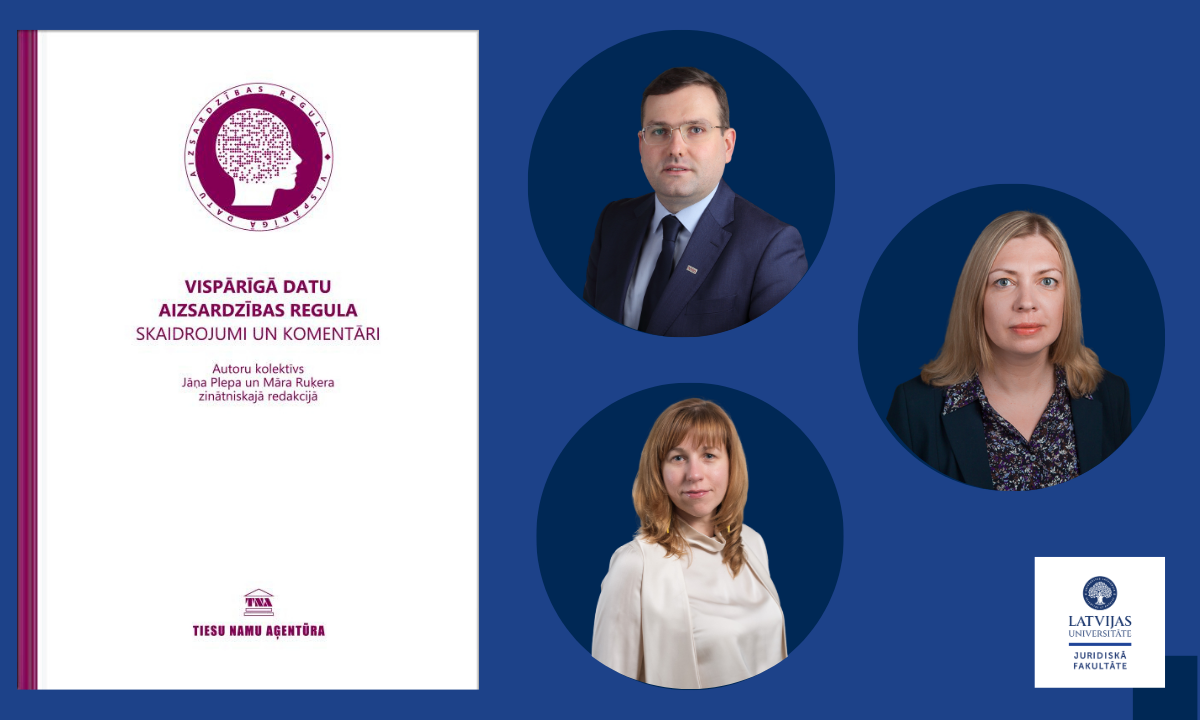
This publication represents an important contribution to Latvian legal scholarship and practice, as it provides, for the first time, a systematic and in-depth explanation of the content, application and interpretation of the GDPR in a single volume. The group of authors includes representatives of the Data State Inspectorate (DVI), data protection specialists, researchers and university lecturers.
The General Data Protection Regulation is binding on all processors of personal data within the European Union—any entity that collects, records, stores, uses, disseminates or otherwise processes personal data. At the same time, it is the most important legal instrument for protecting the fundamental rights and freedoms of individuals, particularly the right to the protection of personal data. The Regulation aims to ensure a balance between individuals’ rights and the interests of others in using personal data, while also facilitating the free movement of data within the European Union.
The book was prepared within the framework of a project initiated by the Data State Inspectorate, with the aim of making the provisions of the GDPR easier to understand and facilitating their application in everyday and professional practice. The commentaries are based on academic research, guidelines issued by supervisory authorities, national and European Union case law, as well as practical examples.
The publication consists of two parts. The first part contains the current text of the GDPR together with detailed commentaries on nearly every article and, in some cases, on individual paragraphs. The second part examines the application of the GDPR in specific situations of personal data processing, including video surveillance and data processing for the purposes of preventing money laundering. The book also includes an extensive index of sources, which will serve as a practical reference tool for further research and application of the legal provisions.
The publication will be useful for lawyers in the public and private sectors, data protection specialists, businesses, judges and law enforcement officials, as well as representatives of academia and students. At the same time, it should be noted that the views expressed in the commentaries represent the personal opinions of the authors and are not legally binding.
 in the Latvian language. Scholars from the Faculty of Law of the University of Latvia made a significant contribution to the publication. The volume was edited by Associate Professor Jānis Pleps of the University of Latvia Faculty of Law and Māris Ruķers. Among the authors are Lecturer Jekaterina Macuka from the Faculty of Law and Researcher and Lecturer Irēna Barkāne from the Institute of Legal Science.)